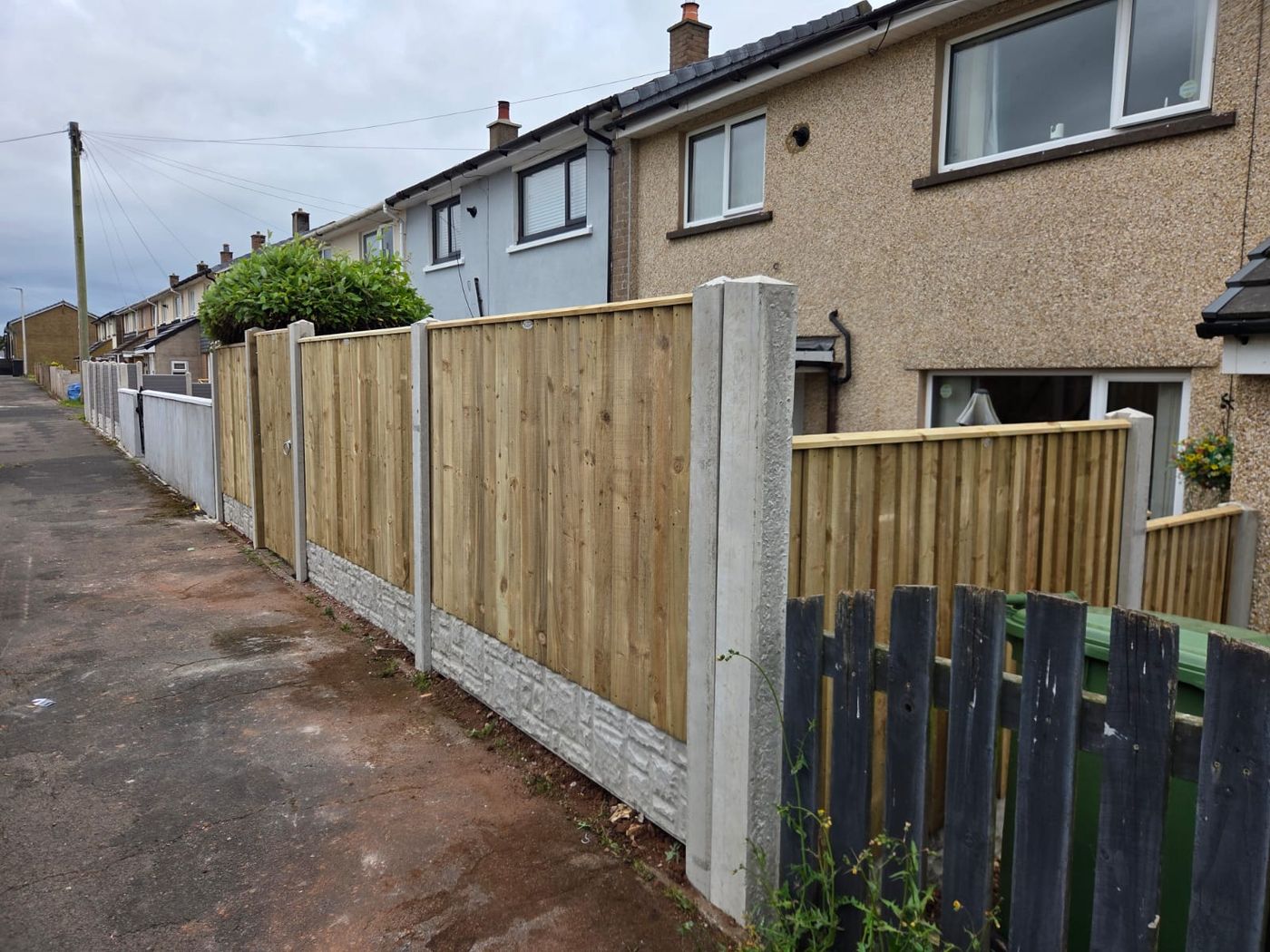
What is the difference between closeboard and panels?
A panel fence arrives as a finished 6ft by 6ft unit and gets slotted between posts. Closeboard is built on site: posts in first, then gravel boards, then arris rails, then individual featheredge boards nailed on with an overlap. Closeboard costs more and takes longer, and it is a much stronger fence. It follows sloping ground properly, individual boards can be replaced without touching the rest of the run, and there is no thin panel frame to blow apart in a gale.
How long will a closeboard fence last?
On concrete posts and gravel boards, with treated timber, you are looking at fifteen to twenty years before anything significant needs doing, and longer if it gets a coat of treatment every few years. What kills fences round here is water and wind rather than age. Anything sitting in wet ground goes first, which is exactly why we keep the timber off the soil.
Can you build it on a slope?
Yes, and this is where closeboard earns its money. Because it is built in place, the rails can rake with the ground so the fence follows the slope with no gaps underneath, or it can be stepped down in level sections for a more formal look. A panel fence on a slope either leaves a triangle of daylight under each panel or needs the ground cutting about.
How high can the fence be?
Two metres is the usual maximum for a boundary fence without planning permission, and one metre where the boundary runs alongside a road or a footpath. That is the general rule rather than a guarantee, because a conservation area or a condition on a newer estate can change it. We will tell you what your boundary allows before we quote it.
Do you take the old fence away?
Yes, lifting the old fence and taking it away is part of the price unless you want to keep it for firewood, which plenty of people do. Old concrete posts and spoil from the new holes go too. The garden gets raked over and left tidy at the end rather than the mess being left as your problem.