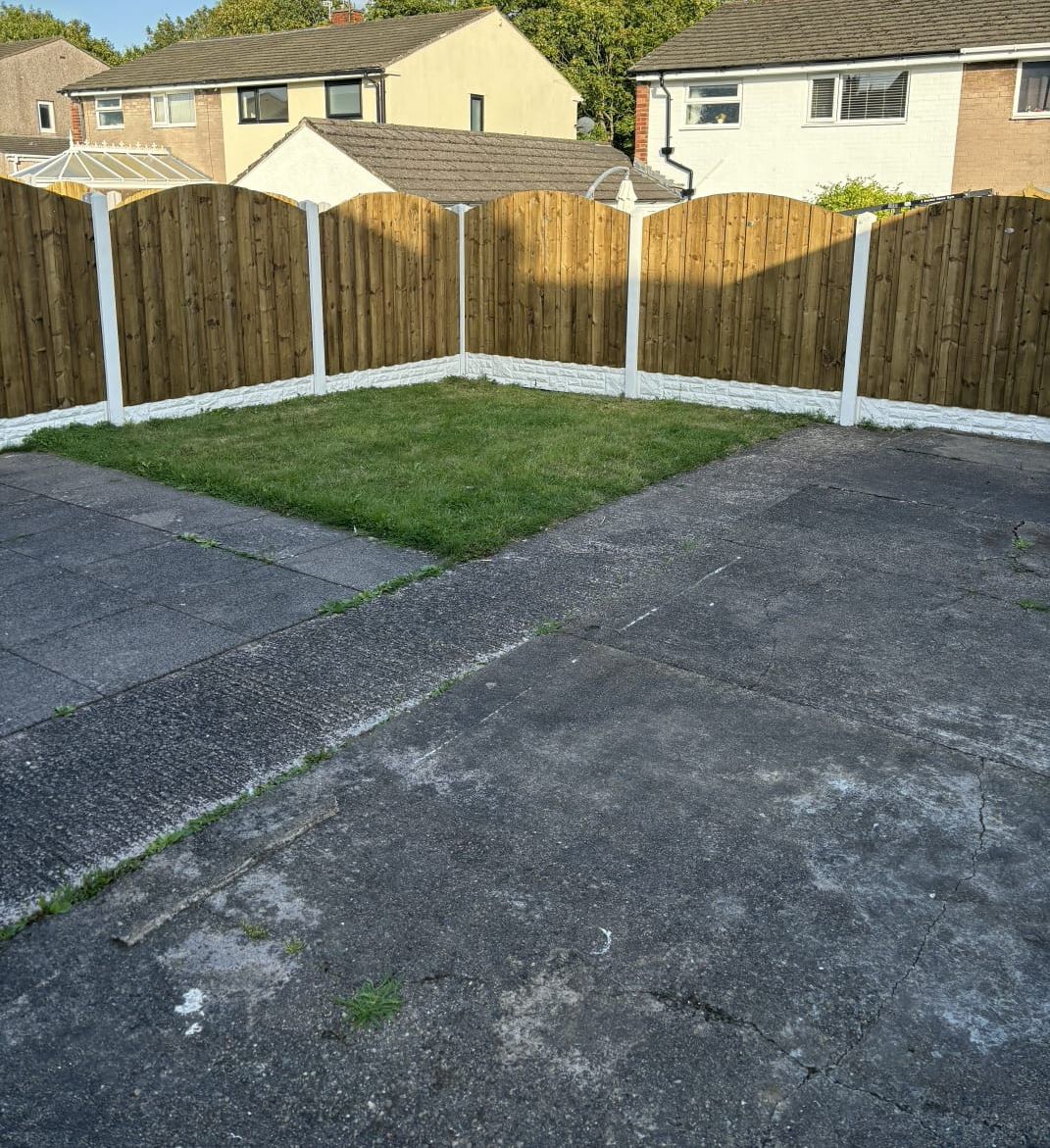
Which panel should we go for?
Lap panels are the cheapest and are fine for a boundary you do not look at. Closeboard panels are heavier and last longer for the same footprint. Bow-top and arched panels are the ones people choose when the fence is part of the garden, round a patio or a lawn. It is worth walking the garden together, because the right answer often changes between the front boundary and the bit you sit in.
Are panels strong enough on the coast?
On a sheltered garden boundary, yes. On a fully exposed run taking wind straight off the sea, a panel fence is the weaker option and closeboard is the honest recommendation. Where panels are still the right choice we use concrete posts and make sure they are seated properly, because most panel failures are the panel lifting out of the slot rather than the panel itself breaking.
Can you replace just a few panels?
Yes, and it is a common job after a bad winter. If the existing posts are concrete and sound, swapping individual panels is quick and cheap. Where the posts have gone, replacing a panel on a rotten post is money wasted, so we will tell you honestly whether you are looking at a repair or a new run.
How long does a panel fence take to put up?
A typical garden boundary of ten to fifteen panels is a day, sometimes two if the old fence has to come out first or the ground is heavy going. Posts set in concrete want a day before the fence takes any real load, so we set them and fit in sequence rather than hanging everything off green concrete.
Do panels need treating?
Most come pressure treated, which protects the timber but does not keep the colour. If you want it to stay a particular shade, it needs a coat of fence treatment every couple of years, and the easiest time to do the first one is before the garden grows back up against it. Gravel boards and posts are the parts worth keeping an eye on.